Mobile Home Sagging Floor Repair and Support Evaluation in Huntington Beach, CA
A floor that sags, feels soft, or slopes in one direction can come from the floor structure itself, the supports beneath it, or a combination — and the right response depends on which. Explore what can cause sagging floors, how to recognize the signs, and how to request an evaluation in Huntington Beach and nearby Orange County communities.
Request a Mobile Home Sagging Floor Repair Estimate
Share your property details and the mobile home sagging floor repair concern you'd like evaluated. Submitting opens your email client with your information pre-filled.
Request an Estimate
Tell us a little about your manufactured home and the issue you're experiencing. Submitting opens your email client with your details pre-filled — no information is stored on this website.
Understanding Sagging Mobile Home Floors in Huntington Beach
A sagging floor can come from the floor's own structure, the supports carrying it, or the conditions beneath — and not every sag points to the same cause.
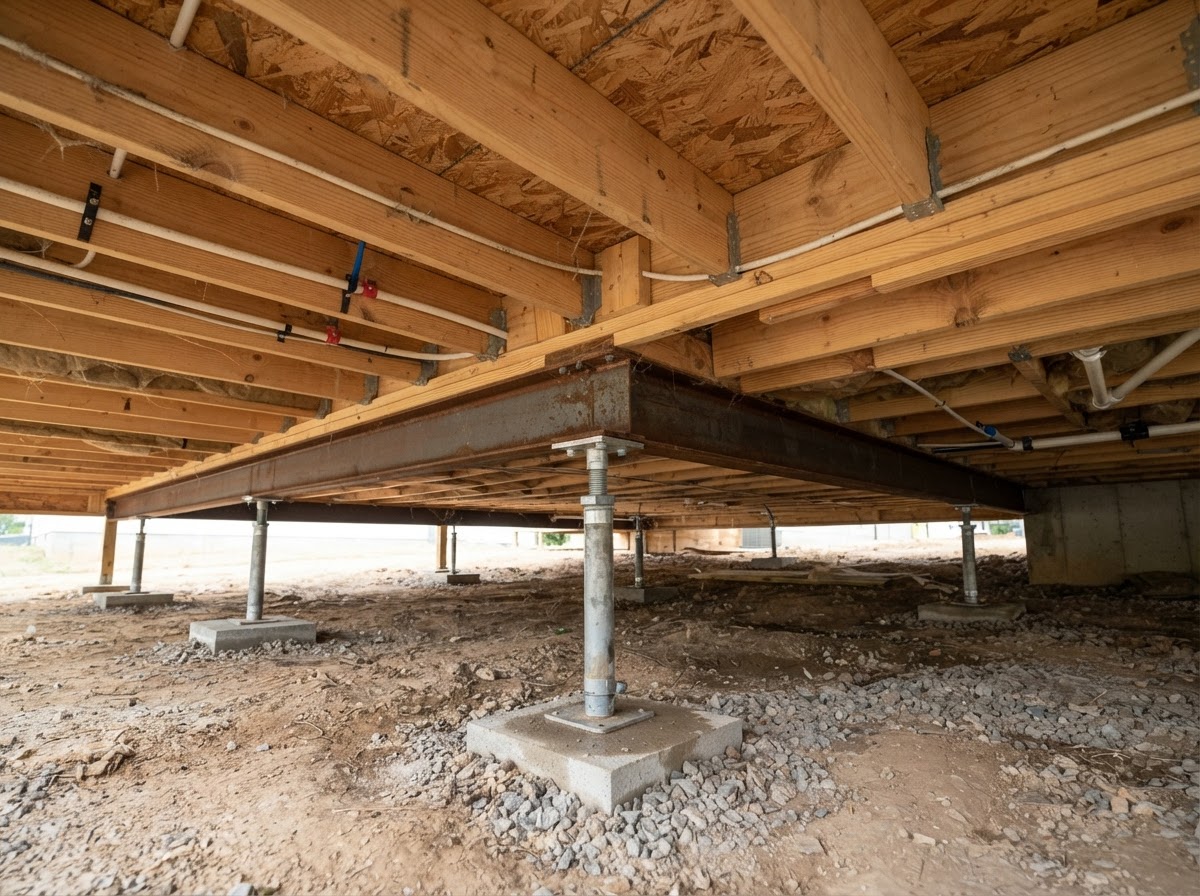
A manufactured home floor is a system: the surface flooring, the subfloor panels beneath it, the joists or framing that carry the subfloor, and the steel chassis that the framing rests on — all carried, in turn, by the piers or pads underneath. A sag can originate at any of those layers, and the symptoms it produces can look similar from above even when the cause is different.
Floor framing can weaken with age or material deterioration. Subfloor panels can soften after sustained moisture exposure. Supports can settle or shift and drop the floor above them. And installation conditions or past alterations can affect any of those components. Not every sagging floor has a foundation problem — which is why an evaluation looks at the floor structure and what's carrying it, not just the surface.
Common Signs of Manufactured Home Floor Problems Near Huntington Beach
Changes in how a floor feels or reads can be early signs that the structure beneath it deserves attention. Some symptoms point to the floor; others to the supports — a qualified assessment helps distinguish them.
Soft Areas
A section of floor that flexes or feels spongy underfoot can indicate deterioration in the subfloor or framing beneath the surface, separate from any leveling concern.
Noticeable Floor Slope
A floor that reads as tilted in one direction — especially across an open room — can reflect movement in the supports or changes in the framing below.
Localized Sagging
A dip concentrated in one spot rather than across the whole home often points to a specific joist, subfloor panel, or the support directly beneath it.
Floor Movement
Flooring that moves, bounces, or deflects when walked on can signal that the structure carrying it no longer performs as it was designed to.
Changes in Floor Transitions
A ridge, lip, or step developing where flooring types or rooms meet can reflect differential movement in the framing or supports beneath.
Visible Deterioration
Cracked tiles, buckled flooring, or gaps opening at baseboards can be surface signs of movement or damage beneath the finish.
Changes Near High-Moisture Areas
Sagging or softness concentrated near a bathroom, kitchen, or plumbing run can point to moisture exposure affecting the subfloor or framing.
These signs are reasons to request an evaluation, not a diagnosis — and not a reason to enter an unsafe crawlspace or attempt floor or joist repairs without qualified help.
Is a Sagging Mobile Home Floor Caused by the Foundation or Flooring?
A sag can come from the floor's own structure or from the supports carrying it — and the appropriate response differs.
Floor-Structure Deterioration
When the subfloor, joists, or framing have weakened — from age, moisture, or material breakdown — the floor sags or softens even when the supports beneath are sound. Addressing it means repairing or reinforcing the floor structure itself.
Support-System Misalignment
When a pier, pad, or footing has settled or shifted, the floor above drops with it. The floor structure may be perfectly sound; the issue is what's carrying it. Addressing it means correcting the support, not the floor.
Because the two can coexist, an evaluation considers both the floor and its supports before recommending a scope.
Under-Home Moisture and Floor Deterioration Concerns in Huntington Beach
Moisture is one of the more common contributors to floor-structure problems, but it isn't assumed without investigation.
Sustained moisture exposure can affect the wood components of a manufactured home floor — subfloor panels, joists, and the belly wrap or insulation beneath them — weakening materials that would otherwise perform well. The source can be a plumbing leak, drainage that runs beneath the home, condensation in an under-ventilated crawl space, or coastal humidity. Where moisture is involved, identifying and addressing the source matters alongside any floor repair.
Moisture isn't assumed to be the cause without investigation, though. A floor can sag from support movement, installation conditions, or framing age with no moisture involvement at all. An evaluation considers moisture as one possible factor among several — not as a default explanation.
Subfloor, Joist, and Framing Considerations
The components that make up a manufactured home floor differ by home type and age — joist size and spacing, subfloor material, and the way the floor ties into the chassis all vary. Where a floor-structure problem is confirmed, the appropriate response depends on which component is affected, the home's construction, and the applicable standard.
No joist replacement, structural reinforcement, or material choice is prescribed here without an evaluation of the actual floor. Some situations call for a licensed contractor, qualified engineering input, or permitting. The repair plan follows the evaluation rather than a generic prescription.
Why Different Symptoms May Call for Different Expertise
Because a sagging floor can come from the floor structure, the supports, the moisture conditions, or a combination, identifying the right scope depends on evaluating the actual home. What's safely accessible, the home's configuration, the condition of the framing and supports, and any history of moisture or past repairs all shape what an appropriate recommendation looks like.
Some situations call for a licensed contractor, qualified engineering input, or permitting, depending on the work and the property's governing authority. An evaluation helps frame those decisions before any repair is planned.
Permitting Considerations for Structural Floor Work
Work involving floor structures may be subject to California HCD alteration guidelines, a local jurisdiction's requirements, or another agency's rules, depending on the work, the property's classification, and the installation system. Not every flooring repair requires the same permit — and some may require none at all.
Readers are directed toward current official information rather than given a universal permit claim. The appropriate authority and any required permits are determined for the actual property and work before definitive statements are made about what applies.
Related Leveling, Foundation & Moisture Services
Sagging Floor Questions from Huntington Beach Homeowners
Discuss Sagging Mobile Home Floor Repair in Huntington Beach
If you've noticed a soft spot, a slope, or a change in how your floor reads, the first step is describing what you've felt and where. Share your property details and request information about appropriate next steps.