Double-Wide Mobile Home Marriage-Line Repair and Alignment in Huntington Beach, CA
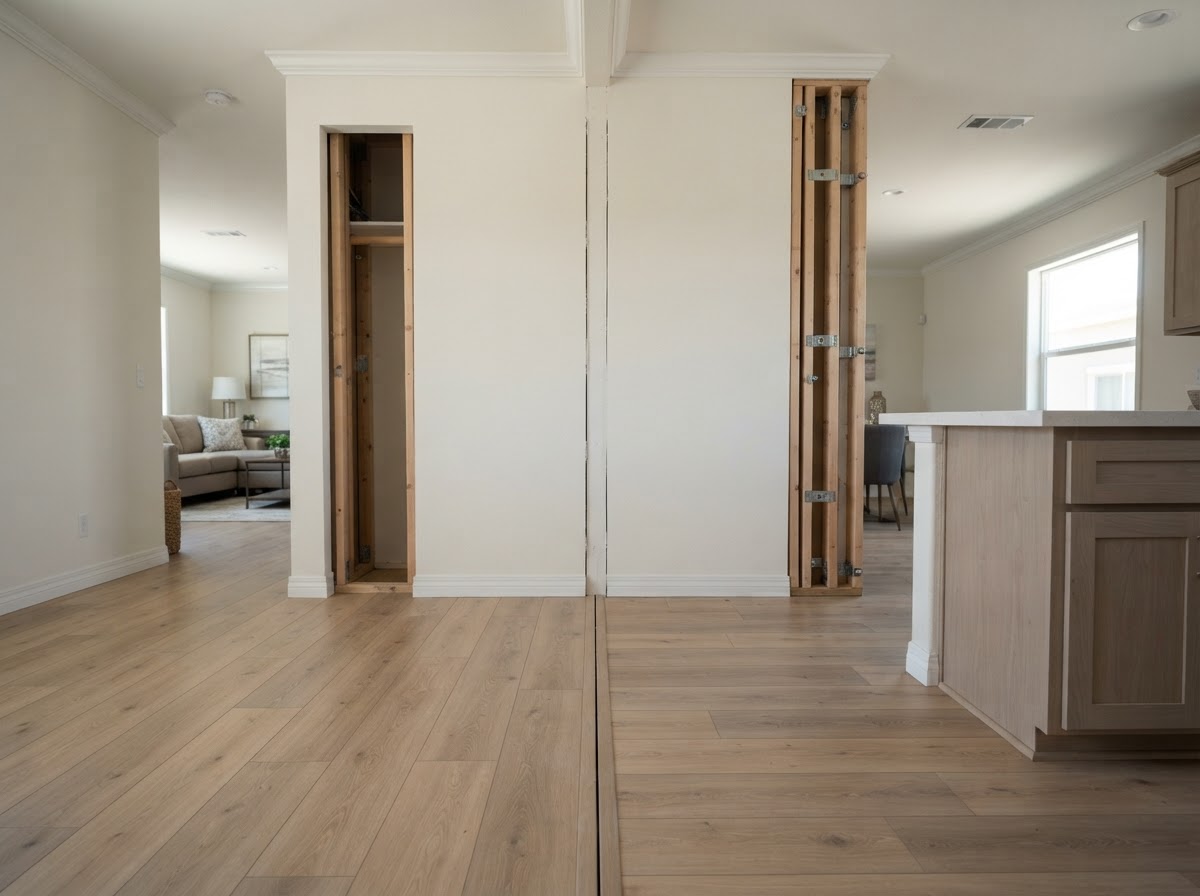
Gaps at the seam, changes in the floor transition, or interior finishes separating where a multi-section home's sections meet can raise questions about the marriage line. Explore how section connections, support systems, and alignment interact — and how to request a marriage-line evaluation in Huntington Beach and nearby Orange County communities.
Request a Mobile Home Marriage-Line Repair and Alignment Estimate
Share your property details and the mobile home marriage-line repair and alignment concern you'd like evaluated. Submitting opens your email client with your information pre-filled.
Request an Estimate
Tell us a little about your manufactured home and the issue you're experiencing. Submitting opens your email client with your details pre-filled — no information is stored on this website.
Understanding Manufactured Home Marriage Lines in Huntington Beach
A marriage line is the structural seam where the sections of a multi-section manufactured home join. Understanding what it is — and what it isn't — helps explain why marriage-line concerns and general leveling concerns aren't always the same.
A double-wide or larger multi-section home is built in two or more factory sections and joined on site. The line where those sections meet — running the length of the home — is the marriage line. At setup, the floor, wall, and roof elements on each side are tied together so the assembled home performs as one structure, and the supports beneath each section are set so the seam lands level and flush.
How the marriage line is assembled varies by home design and by the installation standard that applied when the home was set. Not every multi-section home uses an identical connection system, and the supports beneath the seam aren't always arranged the same way either. That's why a marriage-line concern is evaluated against the specific home and installation — not against a one-size assumption about how every seam behaves.
Signs of Marriage-Line Alignment Problems in Huntington Beach Mobile Homes
Changes at the seam can be early signs that the connection or the supports beneath it deserve attention. Some symptoms point to the marriage line; others have different causes. A qualified assessment helps distinguish them.
Visible Gaps at the Seam
A gap opening where two sections meet along the marriage line can indicate that the connected sections have shifted relative to one another, or that a connection has loosened.
Changes in Floor Transitions
A floor that no longer reads level across the seam — a ridge, a dip, or a step — can reflect movement in the supports carrying each side of the connection.
Interior Finish Separation
Crown molding, baseboard, or wall trim pulling apart directly over the marriage line often tracks movement right at the section connection.
Uneven Adjoining Floor Areas
One section sitting higher or lower than its neighbor can show up as a noticeable transition in the flooring that wasn't there when the home was set.
Door Alignment Concerns
Interior doors near the seam that begin to stick, drag, or no longer latch can be a downstream effect of movement at the connection.
Ceiling or Wall Seam Changes
Cracking, separation, or patched areas reopening along the ceiling or wall at the marriage line are common early signs worth investigating.
Changes Following Support Movement
New symptoms at the seam that appear after leveling, support work, drainage changes, or ground movement may relate the two events and deserve evaluation.
None of these signs by itself confirms a marriage-line defect. They're reasons to request an evaluation — and not a reason to enter an unsafe crawlspace or attempt to adjust the connection without qualified help.
How Foundation Supports May Affect Marriage-Line Alignment Near Huntington Beach
The marriage line sits directly above the supports carrying each section. When those supports move, the seam is often where it shows first.
Each section of a multi-section home is carried by its own set of piers or pads. When those supports are set level and stable, the marriage line above stays flush. When a support beneath one section settles, heaves, or shifts relative to its neighbor, the seam can open, ridge, or step — even when the home's overall elevation reads close to level.
That relationship between the supports and the seam is why a marriage-line evaluation looks beneath the home as well as at the connection itself. Addressing the symptom at the trim without understanding what the supports are doing tends to bring the gap back. No specific lifting or adjustment method is prescribed here — the appropriate approach depends on what an evaluation finds.
Marriage-Line Concerns Versus Broader Leveling Problems
A problem concentrated at the seam and a broader leveling concern can produce similar symptoms, but the appropriate scope can differ.
Marriage-Line Repair
Focuses on the connection where sections meet — its alignment, the hardware that ties it together, and the supports immediately beneath the seam. It's the right scope when symptoms are concentrated at the marriage line and the rest of the home reads level.
General Leveling
Addresses the home's overall elevation across its supports. It's the right scope when the home has drifted level as a whole, even if the marriage line itself reads flush. The two can overlap, which is why an evaluation determines which applies.
What an Evaluation Considers at the Marriage Line
Home Configuration
Double-wide, triple-wide, or other multi-section layouts distribute load across the seam differently.
Installation History
How the home was originally set, and whether the sections were joined per the applicable standard, frames the current condition.
Prior Alterations
Past leveling, additions, or modifications near the seam can change how the connection behaves now.
Support Conditions
The piers, pads, or footings beneath each section — and whether one side has moved relative to the other — are central to the seam.
Manufactured Home Alignment Considerations in Coastal Orange County
Huntington Beach's coastal setting can be relevant to how supports and connections behave over time, but exposure varies property to property and is never assumed.
Moisture, drainage, and salt-air exposure can contribute to corrosion of connection hardware and to changes in the bearing soil beneath supports — both of which can, over time, affect alignment at the seam. Site drainage, skirting ventilation, and proximity to the coast all differ lot to lot.
Not every Huntington Beach property faces the same exposure, and coastal factors are weighed alongside installation history and support condition rather than treated as a default explanation. A property's actual condition is determined by inspection — not by assuming the coast has caused damage that hasn't been evaluated.
Why Repair Scope Depends on the Actual Source
Because a marriage-line symptom can come from the connection, the supports, the drainage beneath them, or a combination, the appropriate repair scope depends on what an evaluation finds. Tightening or re-trimming the seam alone may address a cosmetic concern; resetting supports or restoring bearing capacity may be necessary where movement is the cause; and some situations call for licensed contractors, engineering input, or permitting.
Applying a seam-level fix to a support-level problem — or vice versa — tends to bring the symptoms back. That's why the repair plan follows the evaluation, rather than the symptom alone.
Related Leveling & Structural Services
Marriage-Line Repair Questions from Huntington Beach Homeowners
Request a Mobile Home Marriage-Line Repair Estimate in Huntington Beach
If you've noticed a gap at the seam, a change in the floor transition, or finishes separating where your home's sections meet, the first step is describing what you've seen. Share your property details and request information about appropriate next steps.