
Mobile Home Vapor Barrier Installation and Under-Home Moisture Control in Huntington Beach, CA
A vapor barrier on the ground beneath a manufactured home is one part of how the under-home environment manages moisture — not a complete solution on its own. Explore what vapor barriers do, how they differ from belly wrap, what they can and can't address, and how to request an evaluation in Huntington Beach and nearby Orange County communities.
Request a Mobile Home Vapor Barrier Installation and Repair Estimate
Share your property details and the mobile home vapor barrier installation and repair concern you'd like evaluated. Submitting opens your email client with your information pre-filled.
Request an Estimate
Tell us a little about your manufactured home and the issue you're experiencing. Submitting opens your email client with your details pre-filled — no information is stored on this website.
Understanding Mobile Home Vapor Barriers in Huntington Beach
A vapor barrier is one layer in how the under-home environment manages moisture — and understanding what it does and doesn't do matters.
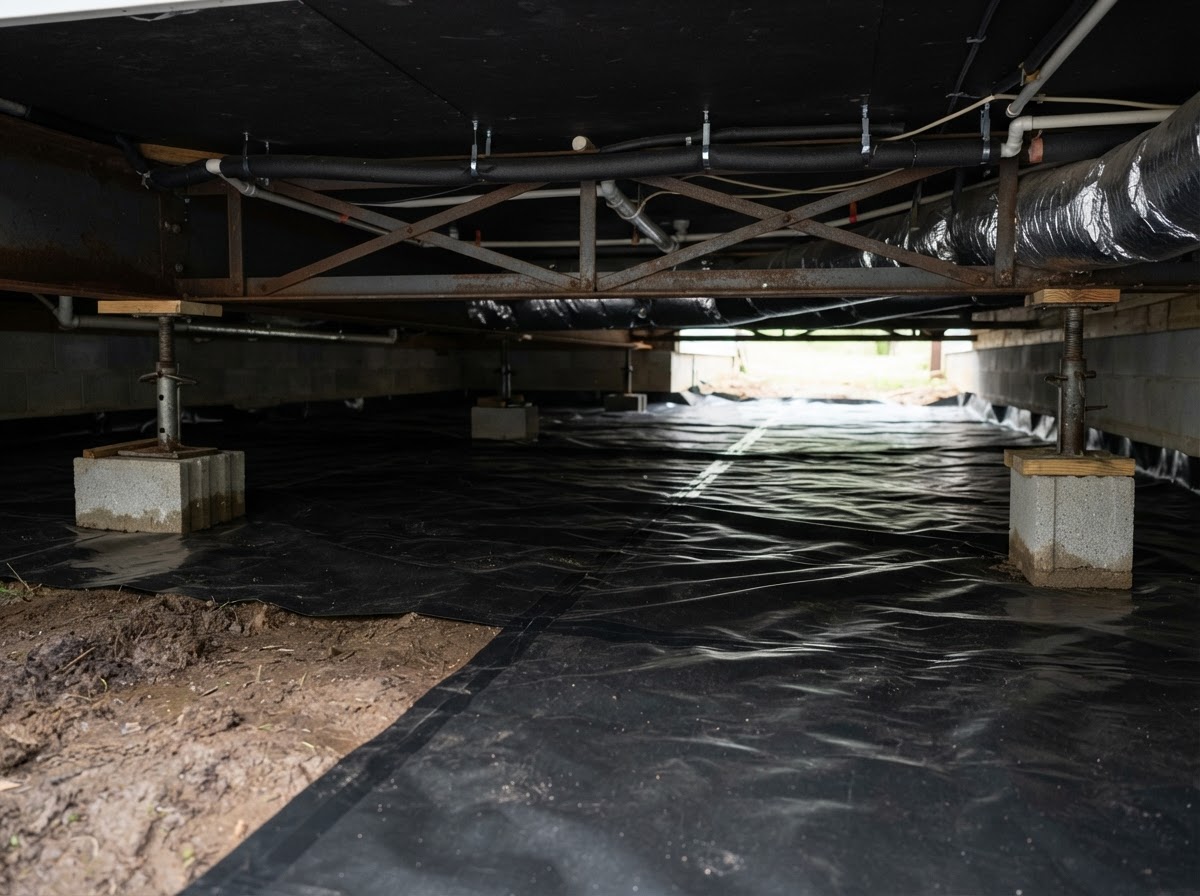
A vapor barrier — more precisely a vapor retarder — is a sheet material installed over the ground beneath a manufactured home. Its job is to slow the movement of moisture vapor from the soil into the crawl space. It sits on the ground, beneath the home's floor structure, and it's distinct from the belly wrap or insulation attached to the home itself. Under the right conditions it can help limit how much ground moisture reaches the components above.
A vapor barrier isn't a waterproofing system. It doesn't stop flooding, groundwater intrusion, plumbing leaks, or condensation, and it doesn't guarantee against mold. It's one part of a larger strategy for managing the under-home environment — alongside skirting, ventilation, drainage, and the belly wrap — and where an active water source is present, that source has to be addressed before or alongside any barrier work. A barrier doesn't eliminate every moisture problem; it manages one.
Common Under-Home Moisture Concerns Near Huntington Beach
Moisture beneath a manufactured home can come from several sources, and the right response depends on which is present.
Ground Moisture
Vapor rising from damp soil is what a ground vapor barrier is designed to slow — the most common under-home moisture source a barrier addresses.
Drainage Conditions
Water running beneath the home from lot drainage or runoff is an active water source a barrier doesn't stop — it needs to be corrected directly.
Water Intrusion
Standing water, flooding, or a high water table reaching the crawl space is beyond what a vapor barrier manages and calls for drainage or site correction.
Ventilation Issues
Too little air movement in the crawl space can let moisture build up and affect the floor structure, insulation, and components beneath the home.
Condensation
Moisture condensing on cool surfaces beneath the home can contribute to the same deterioration ground moisture causes, and a barrier alone may not address it.
Material Deterioration
An existing barrier that's torn, degraded, or missing no longer performs its job, and the components it was protecting can be affected as a result.
The actual causes vary property to property. An evaluation considers which moisture sources are present before recommending a scope — not every under-home concern calls for a vapor barrier, and not every vapor barrier concern is solved by a barrier alone.
Mobile Home Vapor Barriers Compared With Belly Wrap Systems
A ground vapor barrier and belly wrap sit in different places and address different moisture sources — they're not interchangeable.
Ground Vapor Barrier
Lies on the soil beneath the home, slowing the movement of ground moisture vapor into the crawl space. It addresses the soil as a moisture source and is installed relative to the ground, not the home.
Belly Wrap / Underbelly
Attached to the home itself, enclosing the floor's underside and holding the insulation in place. It protects the floor structure from below and is part of the home, not the ground.
Because they sit in different places and address different moisture sources, the two aren't interchangeable. A ground barrier doesn't replace a damaged belly wrap, and a belly wrap doesn't manage ground vapor on its own. An evaluation considers which layer — or both — is involved in a given moisture concern.
How Skirting and Ventilation Relate to Under-Home Moisture in Huntington Beach
Enclosing a crawl space changes how it breathes — and the skirting and ventilation have to be considered alongside a vapor barrier.
Skirting encloses the crawl space, which changes how air, moisture, and drainage behave beneath the home. Properly vented skirting can help manage the climate in the space; compromised or improperly installed skirting can trap moisture and make conditions worse. A vapor barrier works within that environment — it slows ground vapor, but how the space is vented affects whether that moisture can escape.
That's why enclosing a crawl space calls for attention to applicable ventilation and moisture-control requirements. Sealing all openings indiscriminately isn't recommended — it can trap moisture and create the conditions a barrier is meant to help manage. An evaluation considers the skirting, the ventilation, and the barrier together rather than treating any one of them as a standalone fix.
Why an Active Water Source May Need Attention First
A vapor barrier manages ground vapor; it doesn't stop standing water, drainage running beneath the home, a plumbing leak, or a high water table. Where an active water source is present, installing or replacing a barrier over it doesn't resolve the source — the water still reaches the crawl space, and the barrier can't do its job in those conditions.
That's why correcting an active water source may be necessary before or alongside other moisture-control measures. An evaluation considers whether a drainage or water-source issue is present and whether it needs to be addressed as part of the same project — rather than implying a vapor barrier fixes a drainage defect it doesn't.
Coastal Moisture Considerations for Manufactured Homes in Huntington Beach
Huntington Beach's coastal setting can be relevant to under-home moisture, but exposure varies property to property and is never assumed.
Coastal humidity, drainage, and ground conditions can all be relevant to how the under-home environment behaves. The water table, the soil's moisture, and the lot's drainage differ from property to property, and the ventilation and skirting arrangement affects how moisture moves beneath any given home.
Not every Huntington Beach property faces the same exposure, and a moisture concern isn't assumed without inspection. An evaluation considers the actual conditions — soil, drainage, ventilation, and the existing barrier and belly wrap — rather than treating the coastal setting as a default explanation. The right scope depends on what the property actually presents.
Evaluation and Installation Considerations
Where a vapor barrier is appropriate, the right approach depends on the property — the soil and drainage, the skirting and ventilation, the existing barrier and belly wrap, and applicable standards. An evaluation considers whether a barrier is the right response at all, whether an existing barrier can be repaired or needs replacement, and whether other moisture sources need attention first.
No universal material thickness, overlap dimension, attachment method, or ventilation ratio is prescribed here without applicable approved specifications. Some situations may call for a licensed contractor, qualified input, or permitting, depending on the work and the property's governing authority. The plan follows an evaluation of the actual under-home environment — not a generic prescription.
What a Vapor Barrier Does Not Guarantee
A vapor barrier is a specific tool for a specific moisture source. It doesn't guarantee prevention of flooding, groundwater intrusion, plumbing leaks, condensation, mold growth, or foundation movement — each of those has its own cause and its own response, and a barrier doesn't address them. Claiming otherwise overstates what the component can do.
Where any of those conditions is present, it needs to be identified and addressed directly — sometimes before, sometimes alongside, and sometimes instead of a barrier. An evaluation helps determine what's actually happening beneath the home and what combination of responses is appropriate, rather than assuming a vapor barrier is the answer to every under-home concern.
Related Under-Home & Foundation Services
Vapor Barrier Questions from Huntington Beach Homeowners
Request a Mobile Home Vapor Barrier Estimate in Huntington Beach
If you've noticed dampness, standing water, or deterioration beneath your home, the first step is describing what you've observed and the property's conditions. Share your details and request information about appropriate next steps.