Park-Owned and Rental Manufactured Home Leveling, Skirting and Repair in Huntington Beach, CA
Park-owned and rental manufactured homes face the same support, skirting, and under-home concerns as any unit — often with the added layer of turnover and accumulated maintenance history. Explore how these considerations are evaluated for Huntington Beach and Orange County communities.
Request a Park-Owned & Rental Manufactured Homes Estimate
Share your property details and the park-owned & rental manufactured homes concern you'd like evaluated. Submitting opens your email client with your information pre-filled.
Request an Estimate
Tell us a little about your manufactured home and the issue you're experiencing. Submitting opens your email client with your details pre-filled — no information is stored on this website.
Foundation and Leveling Considerations for Park-Owned Manufactured Homes in Huntington Beach
Units a park owns and manages carry the same structural systems as any home, often with additional history to consider.
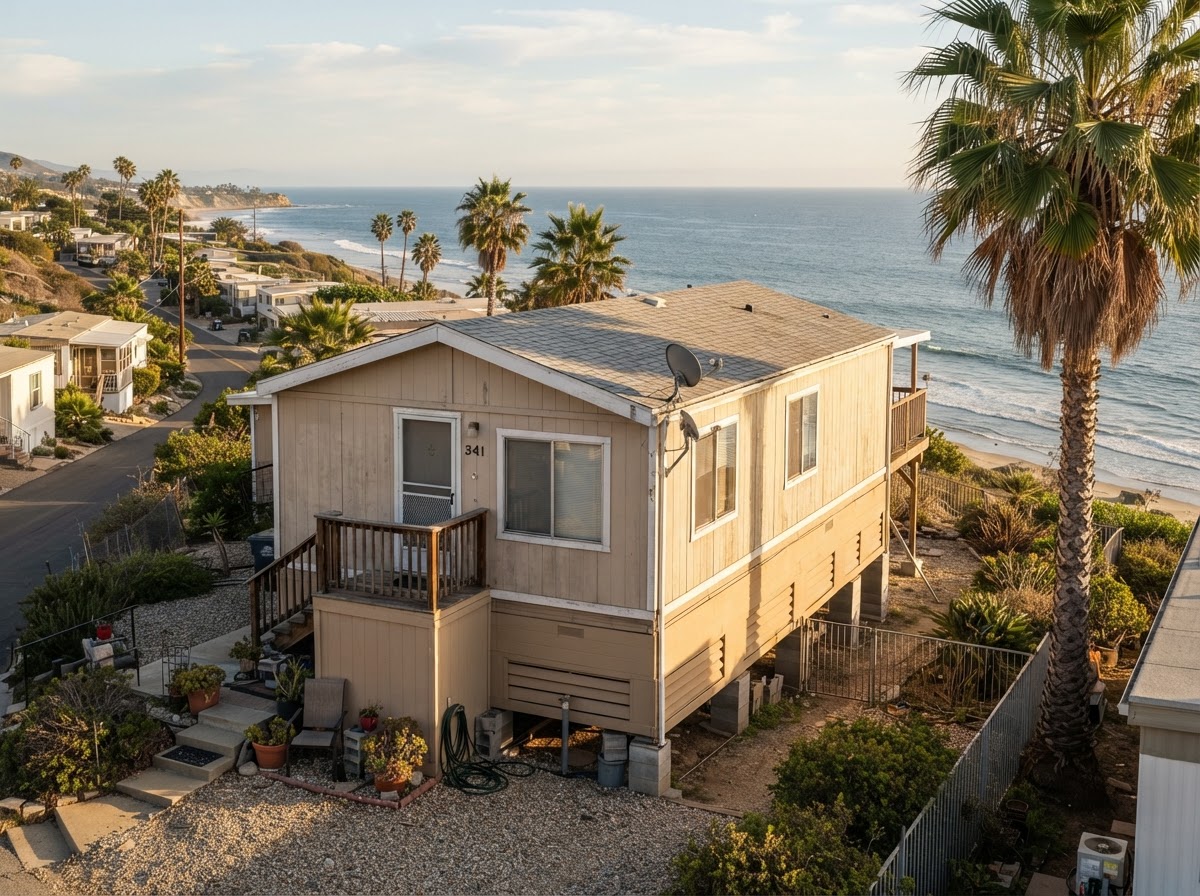
A park-owned manufactured home sits on the same kind of support arrangement — piers, pads or footings, anchoring, and skirting — as any other unit. Support movement, drainage, and material aging can produce the same floor slope, sticking doors, and visible under-home concerns. What differs is the layer of management history: prior repairs, turnover between tenants, and accumulated adjustments all inform how an evaluation is framed.
Because these units may be older or have been worked on repeatedly, original installation details and records of past leveling or under-home work help distinguish a new concern from a long-standing condition.
Manufactured Home Rental Unit Support and Skirting Considerations in Orange County
Rental occupancy doesn't change the structural considerations, though it can shape access and scheduling.
Leveling, foundation supports, piers, skirting, tie-downs, and moisture-related conditions are evaluated the same way for a rental unit as for any home. Occupancy can affect when and how work is scheduled — coordinating with residents on access, notice, and timing — but the structural systems themselves are the same.
Skirting, in particular, takes wear in units with regular turnover: panels damaged during moves, ventilation disturbed by alterations, or materials simply aging. Documenting these conditions helps a community plan rather than react to each new tenancy.
Recording Conditions Across Park-Owned and Rental Units
A clear record of conditions and history supports better decisions at turnover and beyond.
Noting which units show floor slope, where skirting has failed, where corrosion is visible, and when any leveling or under-home work was last performed builds a record that supports prioritized, phased work. Dated, specific notes are more useful than general impressions — and they frame the discussion before any on-site evaluation.
This describes the value of documentation, not a specific reporting service, software platform, or inspection certificate.
Coordinating Access for Occupied Rental Units
Work in occupied rentals requires thoughtful scheduling and clear communication.
Evaluating or working beneath an occupied rental means coordinating access with residents, giving advance notice, and scheduling around how the home is used. These are practical planning considerations — not a verified resident-notification program — and the specific approach depends on the community and the work.
Owner and Resident Responsibilities for Park-Owned Units
Responsibility depends on ownership and the applicable arrangements — it isn't assigned universally.
For a unit the park owns, maintenance responsibility often rests with ownership — but the specifics can depend on leases, community rules, and applicable law. A park-owned rental and a resident-owned unit in the same community can involve very different allocations of responsibility, so ownership arrangements are reviewed as part of scoping rather than assumed. No definitive legal allocation is provided here.
Property Turnover and Under-Home Condition
Understanding visible maintenance concerns is useful when occupancy changes.
Turnover is a natural point to document conditions — a slope a previous tenant reported, skirting damaged during a move, or under-home work completed before the next tenancy. Having that context helps the next occupancy start with a clearer picture and supports planning rather than repeated reaction.
Related Commercial & Community Services
Park-Owned and Rental Mobile Home Questions from Huntington Beach
Request Information About Park-Owned Manufactured Home Services in Huntington Beach
If you're managing park-owned or rental units, the first step is describing what you've noticed across those homes. Share your community's details and request information about appropriate next steps.